ROUTING NUMBER: 307070050


Rest Confident, Your Money is Safe and Secure at Kirtland Credit Union, a message from our President & CEO. Learn More
Mobile Check Deposit is Temporarily Unavailable. We apologize for the inconvenience.
All Kirtland CU branches and locations will be closed on Saturday, July 4 in observance of Independence Day.
If you have been financially impacted by the wildfires in Arizona, Colorado, and New Mexico, we’re ready to work with you on personalized solutions.
Contact us today at (800) 880-5328 to learn how we can help.
Our Los Lunas branch is temporarily closed this morning. If you need in-branch banking services, please visit any of our other Kirtland CU branches.
If you may experience financial hardship related to the government shutdown, we’re here to help. Contact us at 1.800.880.5328 for assistance, and click here to see how we are standing with you.
If you are experiencing financial hardship related to the government shutdown, we’re here to help. Click here to see how we are standing with you.
Use caution if you receive a call, email, or text message that appears to be from Kirtland Credit Union. Don’t click on links or call phone numbers in unsolicited messages. Remember: We will NEVER ask for your online banking access codes, credentials or for you to transfer money.
Chat Temporarily Unavailable: We’re currently experiencing issues with our chat service in Digital Banking. For immediate assistance, please call us or visit your nearest branch. We apologize for the inconvenience.
ROUTING NUMBER: 307070050
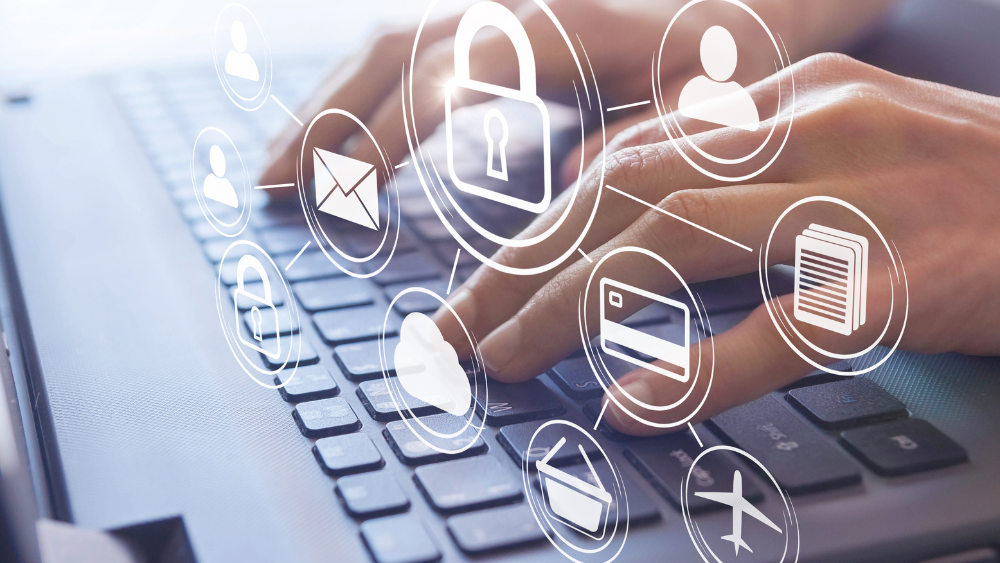
More consumers are conducting financial transactions online and may become vulnerable to tracking, hacking, identity theft, phishing scams, and other cyberspace risks. While nothing can guarantee complete safety on the Internet, understanding how to protect your privacy can help mitigate your exposure to risk.
Here are some ways to help you safeguard your information:
Read privacy policies. Before conducting any financial transactions online, carefully read the privacy policies of each institution that you plan to do business with to find out how secure your financial information is. If you do not understand the legal jargon, email or call customer service to request a simplified explanation of the privacy policy.
Avoid using weak PINS and passwords. When deciding PINS, passwords, and other log-in information, avoid using your mother’s maiden name, your birth date, the last four digits of your Social Security number, or your phone number. Avoid other obvious choices, like a series of consecutive numbers or your hometown. Also, do not use the same PINS and passwords on multiple sites.
Look for secured web pages. Use only secure browsers when shopping online to help safeguard your transactions during transmission. There are two general indicators of a secured web page. First, check that the web page url begins with “https.” Most urls begin with “http;” the “s” at the end indicates that the site password will be encrypted before being sent to a third-party server. Second, look for a “lock” icon in the browser window. (It will not be in the web page display area.) You can double-click on this icon to read details of the site’s security policy. Be cautious about providing your financial information to websites that are unfamiliar. Larger companies and well-known websites have developed policies to protect the rights and financial information of their customers. So, resist the temptation of providing personal information to unknown companies.
Keep your operating system up-to-date. High-priority updates can be critical to the security and reliability of your computer and may offer the latest protection against malicious online activities. When your computer prompts you to conduct an update, do it as soon as possible.
Update antivirus software and spyware. Keep both your antivirus and your spyware programs updated regularly.
Keep your firewall turned on. A firewall helps protect your computer from hackers who might try to delete information, crash your computer, or steal your passwords or credit card numbers. Make sure your firewall is always on.
Do your homework. To learn more tips that may help you secure your computer and protect your private information when conducting financial transactions online, visit www.getnetwise.org, www.onguardonline.gov, or www.wiredsafety.org.
In addition, the Federal Trade Commission (FTC) works on behalf of consumers to prevent fraudulent, deceptive, and unfair practices in the marketplace. To file a complaint or to obtain more information, visit www.ftc.gov or call 1-877-FTC-HELP (1-877-382-4357).
As the Internet continues to evolve, new risks, along with additional protective measures, will be revealed. However, it is up to you to work on safeguarding your financial information online through education and awareness.
This article was prepared by Liberty Publishing, Inc.
LPL Tracking #1-05174395

If you have access issues, CONTACT KIRTLAND FINANCIAL SERVICES.

Save 0.50% off our already low auto refinance rates and enjoy 60 days without payments when you apply before May 31, 2026.